
Cologne between the Cathedral, the Rhine and culture
Accommodation in Cologne
Cologne offers a wide variety of ways to explore the city: the Cathedral and archaeological history, art collections, paths along the Rhine, gardens and brewery culture. Choosing your own focus is a good starting point for planning.
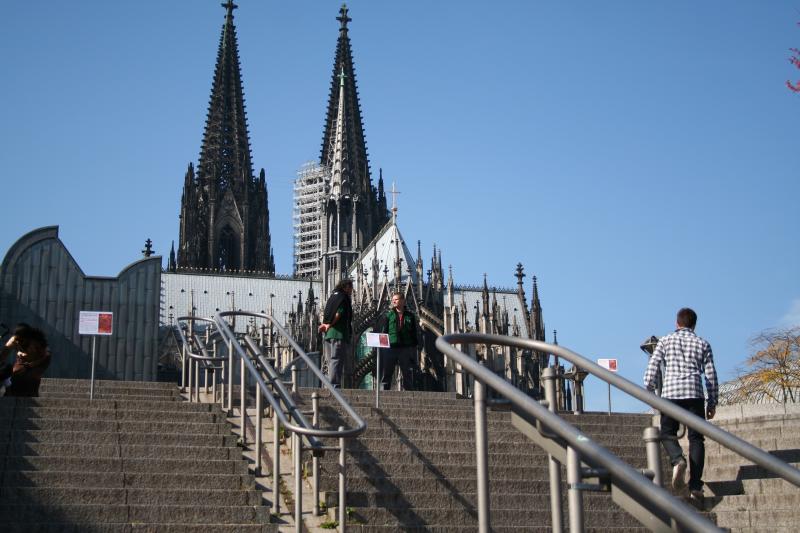
The Cathedral, history and art
Cologne Cathedral is an extraordinary work of human creativity. Its foundation stone was laid in 1248; in 1996, it was added to the UNESCO World Heritage List. It is close to the main railway station and easily accessible by public transport and car. The archaeological excavation beneath the Cathedral also tells the story of Cologne: it covers around 4,000 square metres. The archaeological excavation site at Rathausplatz has also uncovered Cologne’s Roman past and its Jewish history in the Middle Ages.
At the Museum Ludwig, different periods and art movements come together. Its permanent collection represents the most important modern movements from the beginning of the 20th century to the present day. The museum also holds one of Europe’s largest and most significant photography collections, with works from the 19th and 20th centuries. The museum’s collection in Cologne also includes the world’s third-largest Picasso collection, as well as extensive holdings of Pop Art, German Expressionism and photography. Alongside the archaeological traces, art history and photography offer their own distinct highlights for exploring the city.
City walks along the Rhine and through the Old Town
The Short Rhine Panorama Tour offers a longer route through Cologne: the 8-kilometre circular trail starts at Cologne Cathedral, crosses the Hohenzollern Bridge and follows the Rhine, passing through Rheinauhafen and the historic Old Town. A shorter route option is the approximately 800-metre Via Culturalis between Cologne Cathedral and St. Maria im Kapitol. It includes a free audio tour with around 30 audio pieces at the original locations. The different route lengths make it easy to choose the extent of your exploration to suit your plans.
The historic Old Town can also be explored through its buildings and squares: it features monuments, fountains and excavations, each with numerous stories to tell. Its quaint lanes and traditional houses are home to pubs, restaurants and breweries. Cologne’s brewery culture has a history spanning more than 500 years; Cologne is the only city permitted to brew the famous Kölsch.
Gardens and outdoor experiences
In Cologne, Flora and the Botanical Garden combine a heritage garden, a botanical garden and plant exhibition houses; this combination has existed since 1920. The 11.5-hectare site showcases 12,000 cultivated plant species from around the world, outdoors and in greenhouses. The annual programme includes themed Sunday guided tours for individual visitors at 11 a.m. Check the programme for the year of your visit.
For families, Cologne’s Rheinpark offers family-friendly recreation, with large play areas and meadows. It is right on the Rhine, freely accessible and open year-round; check the latest access information before you travel. Cologne Zoo is also located in the heart of the city. Its aquarium features fish, anemones, corals, starfish, mussels and crabs, among other marine life, in around 70 aquariums arranged by geographical region. At the Hippodom, visitors can explore a walk-through replica of an African river landscape featuring hippos, Nile crocodiles, antelopes and various bird species.
Choose the right focus for your stay
The Cathedral, close to the main railway station, is a useful landmark for exploring the city. Consider which of Cologne’s many different sides matters most to you, and base your accommodation search on that focus.
Discover more destinations: Lind, Junkersdorf, Köln-Brück, Gremberghoven, Worringen.
Back to the main travel overview: Cologne.
