
Discover Bad Neuenahr-Ahrweiler: Wine, Roman history and the old town
Accommodation in Bad Neuenahr-Ahrweiler
Bad Neuenahr-Ahrweiler has many sides: in Ahrweiler, the town walls and half-timbered houses shape the historic townscape, while the Roman Villa offers insights into life in antiquity. Viticulture, spa history and Cold War memorial sites add further highlights. Hiking experiences also vary: trails lead through the Ahr Valley and vineyards, past landscapes whose history stretches back to the Middle Ages.
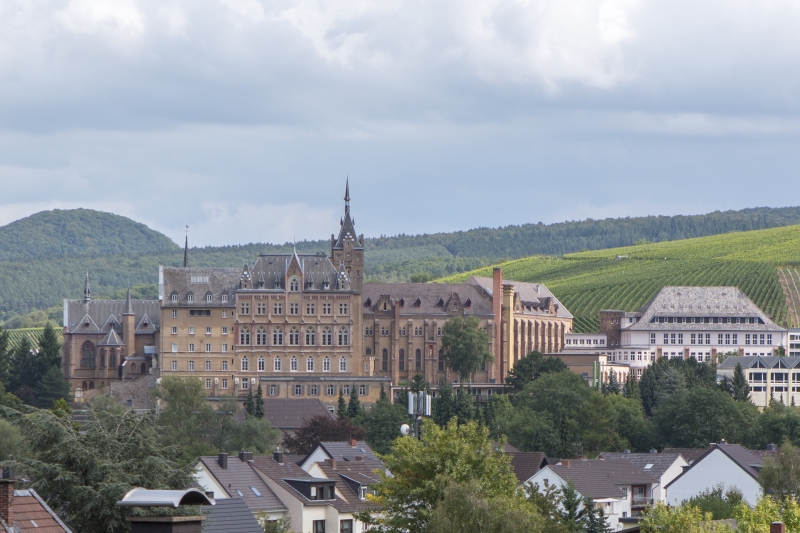
Hiking trails through the Ahr Valley and vineyards
Numerous signposted hiking trails offer different ways to explore the landscape. The AhrSteig is a long-distance hiking trail that runs through the Ahr Valley. The 35-kilometre Rotweinwanderweg (Red Wine Trail) passes through the Ahr vineyards; during the grape harvest, you may encounter people working in viticulture. The trails thus combine nature and viticulture without offering the same hiking experience.
Another option for hikers is the route to the Roman iron-smelting settlement: reach it from the Alte Mauer hiking car park via the Eisenweg trail. The Ahrweiler Roman Villa offers a different way to explore antiquity. Visitors can walk through Roman rooms and experience the refined Roman domestic culture and way of life. A model of the Roman estate and an audiovisual presentation are also part of the visit.
Ahrweiler: town walls, half-timbered houses and history
Ahrweiler’s historic centre is enclosed by town walls, four gate towers, watchtowers and the remains of a former moat. Parts of the town centre are pedestrianised. Half-timbered houses surround St. Laurentius Church in the market square; the church dates back to 1269. The town walls, gates and towers date from the 13th to the 15th centuries and, together with the church, are historic landmarks. Regular guided tours explore the old town.
The Museum of the City of Bad Neuenahr-Ahrweiler also connects architectural history with local history: it is housed in a three-storey residential tower dating from the second half of the 13th century. The permanent exhibition covers the history of Bad Neuenahr and Ahrweiler, as well as the history of tourism in the Ahr Valley. A visit thus links the tower’s architectural past with the development of the two towns and tourism.
From a Roman villa to the government bunker
The Roman Villa brings Roman domestic culture to life in its rooms. A preserved section of the former government bunker, now a Cold War museum, offers a very different perspective on history. The structure was built between 1962 and 1971 as an alternative seat for the constitutional bodies of the Federal Republic of Germany and could accommodate 3,000 people. Visitors explore the government bunker on a guided tour lasting approximately 90 minutes. The contrast between everyday life in a Roman home and a structure designed for emergencies presents two very different historical subjects.
The House of the Marksmen is dedicated to Ahrweiler’s marksmen’s tradition. On display are art-historical treasures from three centuries, uniforms, pictorial documents and historic rifles. Visits and guided tours are available to groups of eight or more by appointment.
Viticulture and traditional village history
Bachem is a historic wine-growing village known for Frühburgunder, an early-ripening Pinot Noir. The Bachem Backes dates from 1650 and has housed the Winzermuseum (Winegrowers’ Museum) since 1978. Bread is still baked in the old bakehouse. The museum displays historic equipment used in viticulture and agriculture, bringing together the history of winegrowing and the bakehouse’s continued use.
In Walporzheim, steep rock formations and the oldest surviving vineyard terraces in the Ahr Valley shape the landscape; the terraces date back to the 12th century. Bunte Kuh and Kaiserstuhl are distinctive rock formations and landmarks of the village. Walporzheim is known for its outstanding wines. It is also home to the Gasthaus St. Peter, the oldest wine tavern on the Ahr.
Spa history and different ways to spend the day
Bad Neuenahr’s spa identity dates back to the Apollinaris spring, discovered in 1852, and the Großer Sprudel, a mineral spring tapped in 1861. Art Nouveau buildings and the spa gardens preserve the historic character of the spa town. The spa tradition focuses on healing, alleviating and preventing illness, as well as promoting health. A cycling tour starts in the spa gardens of Bad Neuenahr-Ahrweiler and follows a detour from the Ahr Cycle Path towards Remagen-Kripp.
When looking for accommodation, you can first consider which themes will shape your trip: hiking trails and wine country, Ahrweiler’s old town and museums, or Bad Neuenahr’s spa history. These themes can guide your planning without requiring every day of your holiday to be the same.
Discover more destinations
Discover more destinations: Ramersbach, Walporzheim, Marienthal, Heppingen, Heimersheim, Ehlingen, Bachem and Sinzig.
Back to the main travel overview: Ahrweiler.
