
Valwig: Apollo Trail, Vineyards and Village History
Accommodation in Valwig
Valwig combines a historic village setting with vineyards and the Apollo Trail, which begins on the banks of the Moselle. You can shape your trip in very different ways: around a challenging hike, the history of the village or the landscape as a habitat for special species.
Hiking the Apollo Trail
The Apollo Trail runs from the banks of the Moselle in Valwig to Cochem. The route is rated difficult, is 10.4 kilometres long and takes approximately 3 hours and 35 minutes. Along the way, it passes through Valwig and Valwigerberg, as well as through woodland and vineyards. Viewpoints and a shelter for breaks are also part of the route. The distance, difficulty rating and estimated time give you concrete guidance for planning your day. Before setting out, check the route and trail conditions.
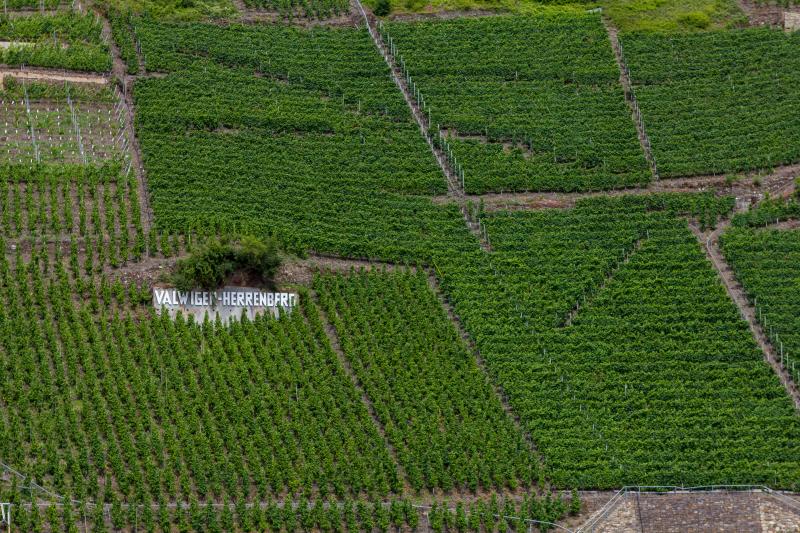
The vineyards above Valwig also tell a story about the landscape: they provide a habitat for the warmth-loving Apollo butterfly. This makes the butterfly a distinctive natural feature of the village, alongside the hiking route itself. Those exploring Valwig can therefore focus on two different aspects: the route through woodland and vineyards, and the habitat these vineyards provide for this butterfly species.
Historic lanes and corners
Valwig’s historic village setting is characterised by narrow lanes and corners. Many buildings and monuments date back to past centuries. The village’s history is therefore not confined to a single building, but forms part of its overall character. For travellers who enjoy looking more closely, the contrast in scale is particularly interesting: on the Apollo Trail, distance and walking time shape the day; in the village, attention turns to its lanes, corners and historic buildings.
When looking for accommodation in Valwig, it helps to first consider what you want to focus on during your stay. Do you want to make the hike, which is rated difficult, a fixed part of your plans, or would you rather discover the historic village setting and the vineyards as a habitat for the Apollo butterfly?
More highlights in the wider Cochem-Zell destination
In the wider Cochem-Zell destination, the medieval Cochem Imperial Castle offers its own perspective on history. In the 19th century, during the Romantic revival of castles, Louis Ravené restored and rebuilt it in the neo-Gothic style. The interior rooms open to visitors include the Knights’ Hall, dining room, hunting room and ladies’ chamber. These rooms bring the castle’s historic character to life in tangible settings.
Other attractions in the wider Cochem-Zell destination appeal to different interests: Jungferweiher is an important breeding and resting area for numerous bird species, particularly during spring and autumn migration. The Geierlay suspension bridge is 360 metres long and runs 100 metres above the Mörsdorfer Bachtal valley, between Sosberg in the district of Cochem-Zell and Mörsdorf in the district of Rhein-Hunsrück. The seasonal variety of birdwatching opportunities and the bridge’s dimensions each add a distinctive feature to the region’s attractions.
Many tourist attractions in Cochem-Zell are well connected to the local public transport network. The visitor programme published in July 2025 lists the relevant bus and train routes for each attraction. Check the current connections when planning a specific journey. In Cochem, the Imperial Castle hosts rustic medieval banquets on Fridays and Saturdays under the name “Gasterey nach Art der alten Rittersleut”. As the schedule may change, it is advisable to check the dates before visiting.
Discover more destinations
Discover more destinations: Ediger-Eller, Klotten, Bruttig-Fankel, Greimersburg, Dohr, Sehl, Nehren, Bremm.
For the overview of the wider destination: Cochem.
