
Diedorf Between History and Culture
Accommodation in Diedorf
Diedorf brings together several historical periods, a diverse cultural program, and a nearby landscape to explore. The Holy Sepulchre and the Anger tell different stories of the town, while the Alte Strumpffabrik offers a wide-ranging program. Southeast of Diedorf, Dörnerberg offers views of the valley and the surrounding ridges. These themes give you different starting points for planning your stay around your interests.
Historical Traces in Diedorf
A specific point in time is the Holy Sepulchre: according to its carved inscription, it was created in 1501. Because of the Holy Sepulchre, Diedorf was a place of pilgrimage from the beginning of the 17th century to the end of the 19th century. The work’s creation and the later history of pilgrimage therefore belong to different chapters: the inscription dates the Holy Sepulchre, while pilgrimage describes Diedorf’s historical role over several centuries.
Diedorf’s Anger also represents a long history of the town. It is said to have been used as a meeting place, market, and court site as early as the 9th century. This dating should be understood as a traditional account. Together with the history of the Holy Sepulchre, dated by an inscription, the Anger shows another side of historic Diedorf: a place for gathering and public life.
From the mid-18th century onward, Diedorf continued to develop. The town’s industrial history spans wool combing and wool weaving, cigar making, and eventually the hosiery industry. This broadens the historical perspective beyond religious traditions and the Anger: the town’s economic development can also be traced through specific trades. Exploring Diedorf reveals not just a single historical date, but several distinct themes and periods.
Cultural Program and Views of the Surroundings
The Alte Strumpffabrik in Diedorf is a venue for art, culture, and education. Its offerings include professional development and continuing education, cabaret, comedy, cinema, concerts, performing arts, theater, workshops, markets, and exhibitions. The selection thus ranges from educational opportunities to performances and events. Programs and access arrangements may change. If you are planning around a specific event, check the dates and access arrangements in advance.
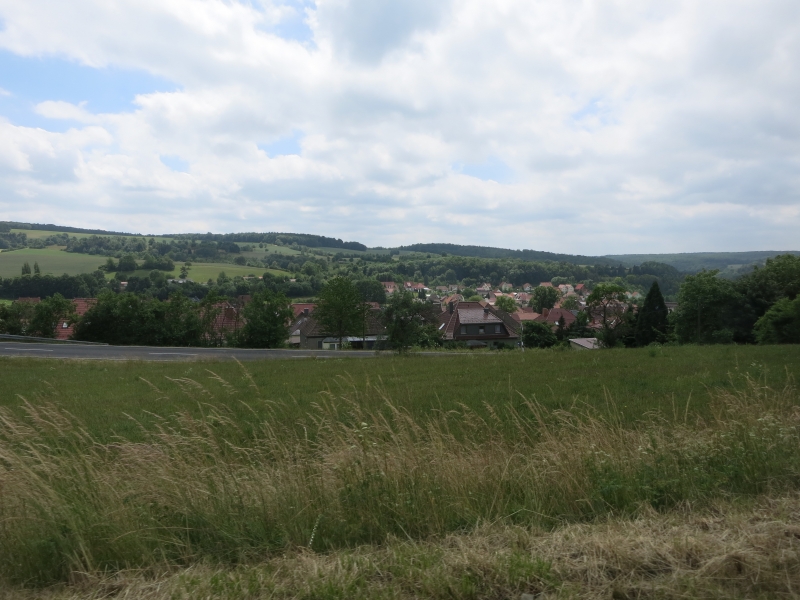
Dörnerberg, located southeast of Diedorf, offers a different perspective. Its summit is almost 480 meters high; from there, you can look out over Diedorf in the valley and the surrounding ridges. The view brings the valley and ridges together and adds a landscape dimension to the town’s history. Diedorf therefore offers different interests side by side: historical sites in the town, cultural offerings, and views of Diedorf from the surrounding countryside.
Choosing Diedorf as a Place to Stay
When choosing accommodation in Diedorf, it helps to distinguish between these reasons for visiting. The historical themes span several centuries; for an event at the Alte Strumpffabrik, specific dates and access arrangements matter; and Dörnerberg offers views of the valley and ridges. Depending on whether history, culture, or the landscape interests you most, you can give your plans a different focus.
If you are traveling with family or in a group, you can compare everyone’s interests in advance. The historical themes tell stories from different periods in Diedorf’s past, while the cultural program includes specific events and nearby Dörnerberg adds a landscape perspective. This makes it easier to decide which aspects of the destination should shape your stay and what to look for when searching for accommodation in Diedorf.
For the broader travel overview: Südeichsfeld.
