
Oldenburg between Monastery, Heath and Hunte
Accommodation in Oldenburg
There are a variety of experiences to choose from in the district of Oldenburg: monastic history in Hude, walks through heath and lowland landscapes, and a canoe route on the Hunte. The destinations also vary in scale—from a circular route of around three kilometres to a 40-kilometre canoe route. You can plan your trip around the topics that interest you most.
Hude Monastery: History and Architecture
Founded in 1232, the Cistercian monastery of Hude was named “Portus Sancte Marie,” translated as “Harbour of Saint Mary.” It quickly became the spiritual, economic and political centre of the eastern part of the County of Oldenburg. The monastery ruins preserve the remains of a three-aisled basilica with an expansive transept. The church was originally more than 57 metres long and more than 24 metres wide—dimensions that give an idea of the scale of the building.
The museum at Hude Monastery offers further insights into architectural and cultural history. Exhibits include models illustrating the building’s history, archaeological finds, maps and texts about the history of the Cistercians. There is also a scriptorium where you can write with a quill. The subject matter thus ranges from the building and its remains to the culture of writing. If you are interested in the monastery’s history, you will find archaeological and writing-related topics here alongside its architecture.
Heathland and Walking Routes
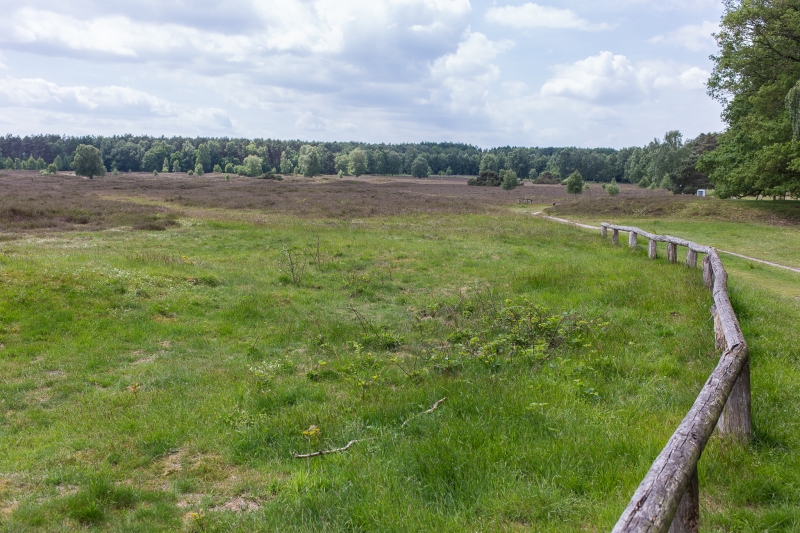
South of Wildeshausen lies the Pestrup burial ground, an archaeological site of regional significance set amid heathland and pine forest. It is the largest contiguous area of heathland in the district of Oldenburg. Both short and longer walks are possible there. This gives you flexibility when planning your day: you can plan a shorter outing or set aside more time to explore the landscape.
The Lethe nature trail in the Wardenburg Lethe lowlands offers a different kind of walk. The circular route, approximately three kilometres long, starts at Wardenburg Watermill by the Lethe bridge and lies west of Wardenburg’s town centre in the “Lethe” nature reserve. This makes it distinct from the short and longer walks at the Pestrup burial ground: here, a circular route of a specified approximate length is described, while there, walks of varying lengths are available.
Explore the Hunte by Canoe
On the water, a 40-kilometre canoe route follows the Hunte from Wildeshausen to Oldenburg. The route has 11 launch and landing points, 10 rest areas and 11 information boards along the nature trail. The landscape along the route also shapes the outing: the river route passes through the Wildeshausen Geest, past sandbanks, steep riverbanks and forests. The canoe route therefore differs from both the heathland walks and the approximately three-kilometre circular route through the lowlands—in its mode of transport, stated length and riverside scenery.
In the wider region, the JAN HARPSTEDT heritage railway provides access to the wooded area around Harpstedt. It adds another option to consider when planning your trip.
Choosing Accommodation for Your Excursions
Your preferred focus can help determine your choice of accommodation. If you are particularly interested in architectural history and museum exhibits, Hude is a useful base for planning; if your trip centres on walks or a canoe tour, other places and activities will take priority. Check the location of your accommodation against the excursion destinations you actually plan to visit.
Discover More Destinations
Discover more destinations: Großenkneten, Wildeshausen, Kirchseelte, Harpstedt, Ganderkesee, Dötlingen, Hatten, Kirchhatten, Hude, Wardenburg, Oldenburg.
Back to the main travel overview: Lower Saxony.
