
Oldenburg (Oldb): Kale, history and green routes
Accommodation in Oldenburg
Oldenburg (Oldb) offers several very different ways to explore the city: its kale tradition in the city center, historical stories surrounding the Lappan, art and architecture, and paths through parks and green spaces. You can choose the themes you want to shape your trip—from city history and exhibitions to a longer circular tour.
Kale and the history of the Lappan
Every year, the “Hallo Grünkohl” event turns Oldenburg city center into a meeting place for kale fans. The program features both classic and modern kale dishes. This recurring event brings a traditional dish together with different ways of preparing it, giving the city a distinctive culinary touch.
The Lappan is considered a landmark of Oldenburg, its first church tower and the city’s oldest building. An audio feature about its history, produced in 2018, begins in the Middle Ages around 1350, when the Lappan was built. Alongside the familiar historical accounts, this provides a specific point in time from which to explore the building’s history. For anyone interested in the city’s past, the Lappan is more than just a name in the cityscape: it brings together several historical connections in one place.
Palace gardens, architecture and green routes
Duke Peter Friedrich Ludwig had the palace gardens laid out as an English landscape garden in the early 19th century. The gardens offer a different perspective on Oldenburg’s history than the palace façade, which features elements from 400 years of European architectural history. The palace gardens and the palace represent two different aspects of design: the creation of a landscape garden and the architecture of a building with a variety of historical elements.
The 21-kilometer “Grünes Oldenburg” circular tour starts at Schlossplatz and passes through parks and green spaces. Along the way, there are views of the water, and the route also passes historic districts and architectural highlights. Anyone interested in a longer tour will find landscape and city themes brought together on this circular route. The “Wissenschaft erfahren” route also follows part of the tour: eight stops and audio features present researchers’ different perspectives on the topic of freedom. The two routes therefore offer different focuses—one on green and historic urban spaces, the other also featuring scientific voices and a shared theme.
Art and exhibitions
The permanent exhibition at the Horst Janssen Museum presents the artist’s work in four thematic areas. It also introduces his techniques, with a particular emphasis on hands-on learning. Bringing together his works, thematic sections and an introduction to his techniques offers a specific way to engage with Janssen’s art.
Another art venue is the brick building on Schlosswall. Since 1996, it has been used, among other things, for the “Keramik im Pulverturm” awards series. The series gives young artists the opportunity to present their ceramic works at the Oldenburg City Museum. Together with the permanent exhibition at the Horst Janssen Museum, it offers a look at a range of artistic themes and ways of presenting them.
More perspectives in the Oldenburg district
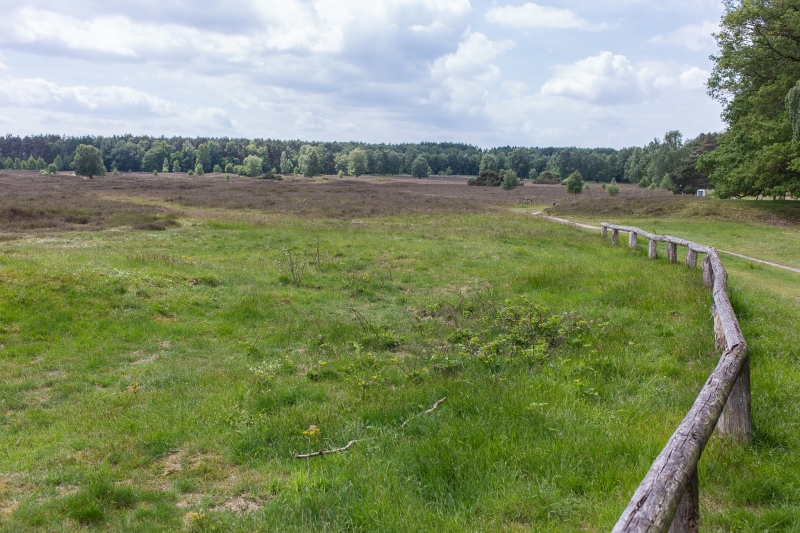
The wider destination of the Oldenburg district also offers different landscapes and historical themes from those found in Oldenburg (Oldb) itself. The Pestrup burial ground south of Wildeshausen is an archaeological site of regional importance, set in a landscape of heathland and pine trees. It is also the largest continuous area of heathland in the Oldenburg district, with short and longer walks available.
The Hude Monastery in the Oldenburg district also tells the story of the region. Founded in 1232, the Cistercian monastery, called “Portus Sancte Marie”—“Harbor of Saint Mary”—quickly became the spiritual, economic and political center of the eastern part of the County of Oldenburg. The monastery ruins preserve the remains of a three-aisled basilica with a broad transept. The church was originally over 57 meters long and over 24 meters wide. The museum at Hude Monastery displays models illustrating the history of its construction, archaeological finds, maps and texts on Cistercian history, as well as a scriptorium for writing with a quill.
The Lethe nature trail in Wardenburg offers a different scale of nature experience. The approximately three-kilometer circular route passes through the Wardenburg Lethe lowlands and starts at the Wardenburg watermill, by the bridge over the Lethe, west of the town center in the “Lethe” nature reserve. Compared with the 21-kilometer “Grünes Oldenburg” circular tour, the two routes differ considerably in their stated lengths and courses.
The Hunte offers another perspective in the district: the 40-kilometer canoe route runs from Wildeshausen to Oldenburg. Along the river in the Wildeshauser Geest are sandbanks, steep riverbanks and forests. The route has 11 launch and landing points, 10 rest areas and 11 educational trail information boards.
Discover more destinations: Ganderkesee, Harpstedt, Wardenburg, Kirchseelte, Wildeshausen, Hatten, Dötlingen, Hude.
Back to the main travel overview: Oldenburg.
