
Wildeshausen
Accommodation in Wildeshausen
Wildeshausen brings together church architecture, archaeology and landscape: St. Alexander’s Church is an example of Late Romanesque architecture, the Wildeshausen Prehistoric Centre is dedicated to archaeology, and the Pestrup burial ground lies south of the town. These different themes offer several starting points for planning your trip – from visiting a distinctive church building to walking across a heathland area.
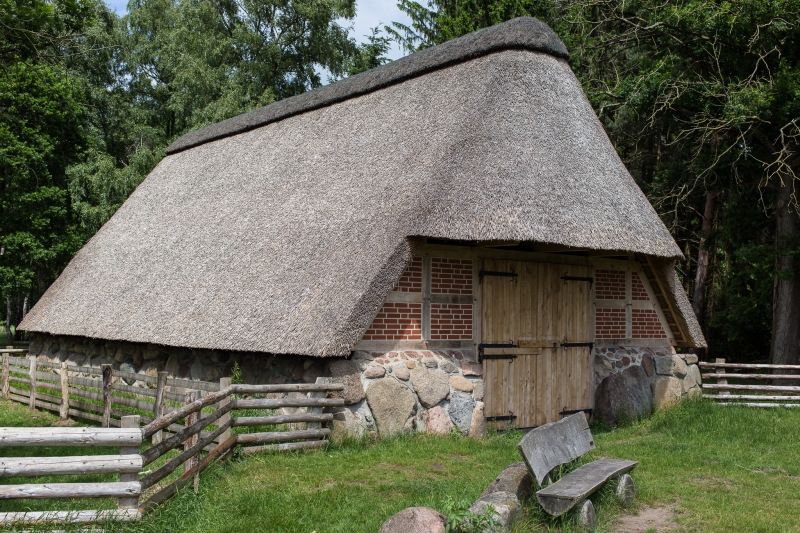
Culture and archaeology in Wildeshausen
St. Alexander’s Church in Wildeshausen is the only surviving Late Romanesque basilica in the Oldenburg region. It is open daily except Tuesdays. Check the latest official information before your trip if you are planning a visit. Together with the Wildeshausen Prehistoric Centre (UZW), the church shows another side of the town: here, the focus is on architectural history, while the centre focuses on archaeology.
The UZW is an information centre for archaeology in the Wildeshauser Geest Nature Park. From Wildeshausen railway station, you can reach it on foot through the town centre in 10 minutes, covering 600 metres. This gives you a practical point of reference if you would like to combine your visit to Wildeshausen with a walk through the town centre.
The Pestrup burial ground stretches across about 40 hectares south of Wildeshausen, with around 500 burial mounds. Within the wider Oldenburg destination, it is the largest contiguous heathland area in the district of Oldenburg. Both short and longer walks are possible there. An archaeological site and heathland meet here – a different focus from a visit to the church or information centre.
The Hunte River and landscapes in the wider Oldenburg destination
Another way to experience the landscape is the 40-kilometre canoe route on the Hunte from Wildeshausen to Oldenburg. It passes through the Wildeshauser Geest, by sandbanks, steep riverbanks and forests. Along the route, there are 11 launch and landing points, 10 rest areas and 11 educational trail signs. The route combines a longer river journey with waypoints along the way; it offers a different kind of trip from walking around the Pestrup burial ground.
History and other landscapes
Hude is also part of the wider Oldenburg destination. The Cistercian monastery there was founded in 1232 and quickly became the spiritual, economic and political centre of the eastern part of the County of Oldenburg. It was called “Portus Sancte Marie”, meaning “Harbour of Saint Mary”. The monastery ruins preserve the remains of a three-aisled basilica with a wide transept. The church was originally over 57 metres long and over 24 metres wide.
The museum at Hude Monastery features models illustrating the building’s history, archaeological finds, and maps and texts about the history of the Cistercians. A scriptorium is dedicated to writing with a quill. So, in the wider Oldenburg destination, cultural attractions include not only the monastery ruins but also models, finds and the history of writing.
The Lethe Nature Trail in Wardenburg offers another perspective on the landscape. The circular route is about 3 kilometres long and runs through the Wardenburg Lethe lowlands. It starts at Wardenburg Watermill by the bridge over the Lethe and lies west of Wardenburg’s centre, in the “Lethe” nature reserve.
Choose where to stay based on the experiences you actually want to include in your itinerary.
Discover more destinations: Hude, Hatten, Harpstedt, Kirchseelte, Kirchhatten, Oldenburg, Großenkneten, Wardenburg
Back to the wider travel overview: Oldenburg.
