
Schwerin: Between Residences, Art and Nature
Accommodation in Schwerin
Schwerin combines a diverse residential ensemble with painting, garden art, lakeside paths and wildlife. This variety is what makes the city interesting: a stay can focus on architectural and cultural history or include experiences in nature and on the water. When planning your trip, it is therefore helpful to first decide which themes matter most to you.
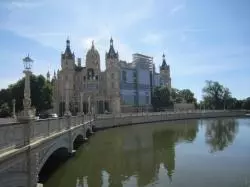 Schweriner Schloss am Schweriner See
Photo: www.wato.de, S. Powalla
The Residential Ensemble and Gardens
The Schwerin Residential Ensemble, a UNESCO World Heritage Site, comprises 38 components. These include the Grand Duke’s residential palace, manor houses, cultural and religious buildings, as well as the ornamental Pfaffenteich lake. This mix extends beyond the palace itself: the ensemble brings together different types of buildings and the lake as part of the whole. Since 2024, the residential ensemble has been recognised as a UNESCO World Heritage Site and stands as a testament to the history and culture of Mecklenburg-Western Pomerania.
The 25-hectare palace gardens were reconstructed according to historical plans for the 2009 Federal Horticultural Show and are considered an impressive garden monument of high national importance. Thus, alongside the buildings, the designed landscape is another distinct part of Schwerin’s range of attractions. If you want to give culture and outdoor spaces different emphasis, the palace gardens offer a different focus from the art collection.
Art from Old Masters to Contemporary Works
The permanent exhibition at the Staatliches Museum Schwerin juxtaposes works by Rubens, Rembrandt and Frans Hals with contemporary art. It also features themed galleries dedicated to Marcel Duchamp and East German art; digital offerings, interactive stations and immersive installations enhance the exhibition experience. The collection of Dutch paintings and works from the 16th to the 21st century broadens the perspective beyond individual artists. This means you can associate Schwerin not only with its residential history, but also with art that brings different periods and perspectives together.
Wildlife and Lakeside Paths
Schwerin Zoo covers around 25 hectares and is home to approximately 1,700 animals from some 150 species. A special highlight is the 8,000-square-metre savannah for southern white rhinoceroses, which is considered unique in northern Germany. The zoo therefore offers a distinct focus on nature and wildlife alongside the palace, gardens and museum.
The routes also offer different experiences. The Schwerin City Circular Tour follows the shore of Lake Schwerin, passes Zippendorf Beach and ends at Reppin Castle. From March to October, a hiking trip begins with a boat journey from Schwerin Palace to Zippendorf, followed by a 10-kilometre walk along the lakeshore to Reppin Castle. From there, you can enjoy a view across the lake. While the City Circular Tour is described as a route along the shore, the seasonal hiking trip combines a boat ride with a longer walk. Check the timetable in advance for this trip.
To cycle to the Schwerin-Mueß Open-Air Museum of Folklore, travel from the city centre along Franzosenweg, past Zippendorf Beach, and then take a cycle path to Mueß. Zippendorf Beach has a public toilet, an accessible toilet, a German Red Cross water rescue station and a beach wheelchair. If you plan around these facilities, check them again before your trip.
Which Schwerin experiences should shape your stay?
If wildlife and lakeside paths are your priority, the zoo, beach and routes can guide your choices. Decide based on the experiences that matter to you, and compare accommodation options with your own travel plans. This keeps Schwerin itself at the heart of your search, rather than letting a single excursion destination determine your entire stay.
Discover more destinations: Wismar.
Go to the main travel overview: Mecklenburg-Western Pomerania.
