
Discover Mecklenburg-Western Pomerania
Accommodation in Mecklenburg-Western Pomerania
Mecklenburg-Western Pomerania brings together Brick Gothic architecture and Hanseatic towns with coastal landscapes, islands and trails through the interior. What you want to experience can shape your choice of accommodation: do you want to focus on historic town centres, a longer cycling route or a hike through varied landscapes? Distances and route lengths vary considerably, so a suitable base depends on which destinations matter to you on your trip.
 Müritzer See, Mecklenburgische Seenplatte
Hanseatic history and Brick Gothic architecture
The historic centres of Stralsund and Wismar tell the story of the Hanseatic League’s trading history and the development of Brick Gothic architecture in the Baltic Sea region. Wismar’s medieval harbour basin has been preserved. Stralsund’s Old Town has remained unchanged on an island since the 13th century; its skyline is defined by outstanding examples of Brick Gothic architecture. The two cities therefore offer distinct points of interest if you want to focus on historic urban spaces and architecture.
Schwerin also combines urban history with striking architecture. The Schwerin Residence Ensemble has been recognised as a UNESCO World Heritage Site since 2024 and is a testament to the history and culture of Mecklenburg-Western Pomerania. Schwerin Palace is situated on an island amid lakes and parkland. Its magnificent rooms include the Throne Room and the Ancestral Gallery. For a trip that combines culture and landscape, Schwerin offers a different focus from the historic Hanseatic towns.
Cycling and hiking routes compared
The stated distances and stages make it possible to compare the scale of the cycling routes. The Usedom Circular Route is 160 kilometres long and has three stages. Its description highlights a 42-kilometre stretch of white sandy beach, as well as the green hinterland with thatched-roof houses and unspoilt nature. The Fischland-Darß-Zingst Circular Route covers 201 kilometres in four stages, passing through a landscape of beaches, steep banks, bays, spits and the Western Pomerania Lagoon Area National Park.
Two other circular routes offer cultural and historical sights by bike. The Western Brick Route covers 370 kilometres and has seven stages. Highlights along the route include historic brick churches, town gates, farm cottages and townhouses. The Eastern Brick Route is 303 kilometres long and has five stages; its listed attractions include medieval brick churches in Rostock, Stralsund and Greifswald. Check route conditions and access information before setting out.
The hiking routes also vary considerably in length. The Nature Park Trail starts in the Schaalsee Biosphere Reserve and its first section crosses glacially formed hills to the state capital, Schwerin, and its imposing palace. Its southern route runs for just under 700 kilometres through the interior to the island of Usedom and is designated the E9a European long-distance path as far as Altwarp. The trail markings are being updated; take this into account when planning your hike.
Coast, nature and shared discoveries
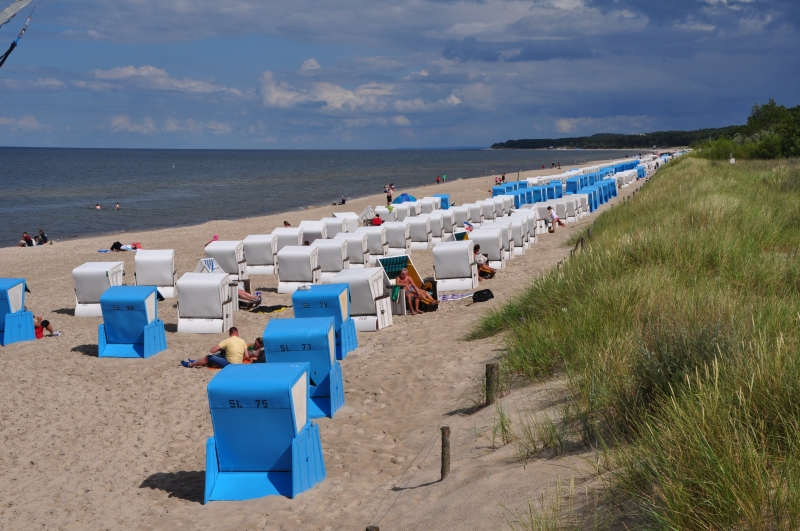
On the Fischland-Darß-Zingst peninsula, low and steep shores alternate with coastal lakes, bays and dunes. The landscape is protected as part of the Western Pomerania Lagoon Area National Park. On Rügen, the Rügen Circular Route leads to Jasmund National Park, where chalk cliffs are nestled among the lush green beech forests of Stubbenkammer. These landscapes offer a different focus from historic town centres or the long routes through the interior.
For an exploration of the northern seas, the OZEANEUM in Stralsund offers exhibitions, 50 aquariums and the “Sea for Children” experience area. You can find artistic inspiration in the artists’ colonies in Ahrenshoop and Schwaan, and on the island of Hiddensee, where works by influential artists from the region are shown alongside contemporary works. On the Peene, you can go canoeing and may also spot beavers building their lodges.
Choose accommodation to suit your trip
First, consider which experiences you want to combine: urban history, a particular cycling route, hikes, or natural and coastal landscapes. Mecklenburg-Western Pomerania has an extensive network of bike rental stations offering touring bikes, children’s bikes and e-bikes. Many regions can be reached by train. Bicycles are allowed on most regional trains, subject to capacity and any reservation requirements. Check these conditions before travelling; the availability of individual rental services may also change.
Small farm shops and farm cafés are also part of the region’s character. Their offerings range from traditional to modern and invite you to discover regional cuisine. As individual businesses and their opening hours may vary, it is worth checking the latest information if you are planning a visit. Whether you fill your days with cycling, architecture, nature or culinary stops, the specific places you choose will guide your search for suitable accommodation.
Discover more destinations: Schwerin, Wismar, Müritz, Northwest Mecklenburg, North Pomerania, Rostock, Mecklenburg Lake District, Ludwigslust-Parchim, Vorpommern-Greifswald, Vorpommern-Rügen
