
Wismar: Harbour, Hanseatic History and Brick Gothic
Accommodation in Wismar
A preserved medieval harbour basin, a permanently moored cog and Brick Gothic architecture define Wismar’s historic character. There are also sightseeing cruises from the Old Harbour, guided tours of the UNESCO-listed Old Town and a chronological look at the city’s history at the SCHABBELL. If you’re looking for accommodation in Wismar, you can plan your stay around whether you’re particularly interested in seafaring, architecture or historical context.
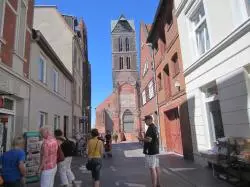 Die St- Marien Kirche in Wismar
Photo: Sabine Powalla für www.wato.de
Hanseatic history and maritime life
Wismar is one of the medieval towns founded in the 13th century. From the 13th to the 15th century, these towns were leading centres of the Wendish quarter of the Hanseatic League; Wismar was among them and was itself a leading centre. The city contributed to the development and spread of brick-building techniques and building types characteristic of Hanseatic towns in the Baltic region. Hanseatic history and brick architecture are therefore two sides of the same historical story.
Wismar’s medieval harbour basin has been preserved. The long seafaring tradition is especially easy to experience at the Old Harbour. A historic, typically Hanseatic cog is permanently moored there, while passenger ships also offer sightseeing cruises. This place therefore brings together a historic ship and passenger-ship cruises as different maritime perspectives. If you’re planning a sightseeing cruise, check the current schedule in advance.
Brick Gothic architecture and the history of St. Georgen
St. Georgen is one of Wismar’s three main churches and an outstanding example of North German Brick Gothic architecture. The church was heavily damaged during the Second World War, rebuilt from 1990 onwards, and reopened as a place of worship and cultural venue in 2010. Its architecture and the story of its reconstruction offer different points of historical interest. The viewing platform at St. Georgen offers an impressive view of Wismar’s UNESCO World Heritage-listed Old Town and harbour. Opening arrangements may change, so check access details before your visit.
City history at the SCHABBELL
The SCHABBELL is one of the earliest Renaissance buildings in the Baltic region. Permanent exhibitions covering 1,200 m² at the SCHABBELL and the neighbouring building explore the history of Wismar, from Störtebeker to the present day, as well as the houses of Heinrich Schabbell. Temporary exhibitions on topics relevant to the city are held in the SCHABBELL’s attic. Visitors experience Wismar’s complex history chronologically as they explore the museum; audio stations and numerous interactive activities are also part of the experience. While the harbour and churches offer other ways to explore the past, the focus here is on the city’s development.
Explore the Old Town on foot or by bus
Guided tours of the UNESCO-listed Old Town are available on foot and by bus. The two formats differ in how you get around, so you can choose the option that best suits the way you want to explore the city during your stay. If a tour is a fixed part of your plans, check the current dates in advance.
Choose Wismar as your place to stay
The city’s different historical highlights can help you decide whether Wismar fits your travel plans: seafaring tradition and sightseeing cruises, Brick Gothic architecture with a compelling story of reconstruction, or a chronological look at the city’s history.
Discover more destinations: Schwerin.
Return to the main travel overview: Mecklenburg-Western Pomerania.
