
Bad Langensalza: Roses, Gardens and History
Accommodation in Bad Langensalza
Discover Bad Langensalza through its roses, gardens and city history. The rose garden brings together a large collection and a local history of rose breeding; museums complement the botanical themes with art and pharmacy. Buildings such as Dryburg Castle also add a historical touch to a city walk.
Roses as Garden and City History
On a former factory site covering 18,000 m², the rose garden displays almost 450 rose species and varieties. A collection of Bad Langensalza roses is also on view there. Between 1950 and 1990, 91 rose varieties were bred in the rose garden. This means you encounter roses not only as part of the garden collection, but also as the subject of a specific local breeding history. Anni Berger, Germany’s only rose breeder, worked in Bad Langensalza. In 2002, the town received the title “City of Roses.”
Gardens Beyond the Rose
The Botanical Garden is home to rare cacti and yuccas from South America. Collection details may change; if you are interested in particular plants, check the latest information in advance. A visit to the garden can end with a walk through the Kneipp wading pool. This allows you to combine looking at the plants with another garden activity described here.
Building History and Museums
Dryburg Castle is the town’s oldest surviving secular building constructed entirely of stone. “Secular” means a non-religious, non-church building. The town museum in the Augustinian Monastery brings together art and architectural history: the altar cross by Johann Heinrich Köhler (1669–1736) is a particular highlight. Visitors can climb the tower of the former monastery church as part of the museum tour. Check the museum’s current access information before your visit.
The Thuringian Pharmacy Museum explores a different subject. In eight rooms, visitors can discover various aspects of working in an old pharmacy. If you plan to visit this museum, please check the latest opening information beforehand.
More Experiences in the Wider Unstrut-Hainich Destination
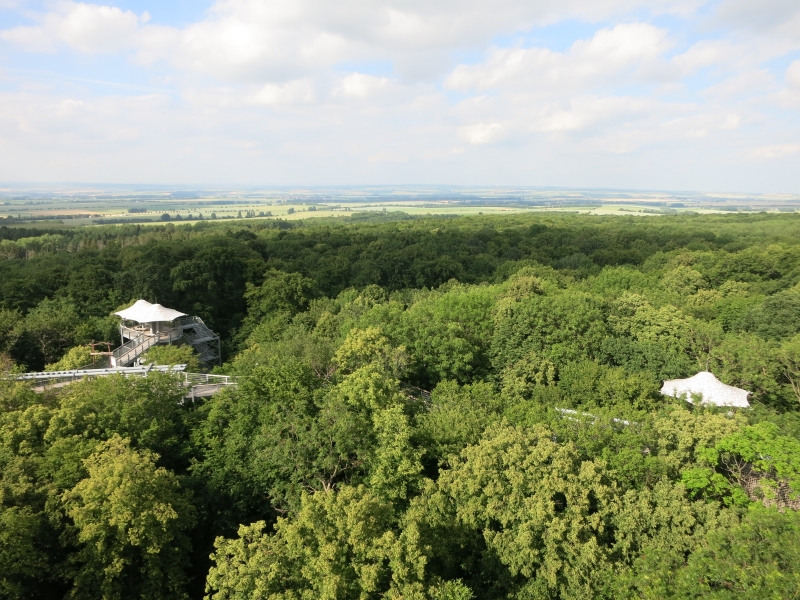
Further nature and cultural experiences in the wider Unstrut-Hainich destination complement your impressions of Bad Langensalza. On the treetop path, you can walk 24 meters above the Hainich forest canopy; from the treehouse, the view stretches across Hainich National Park. Visitors who are comfortable with heights can climb the path’s tree tower to a platform 40 meters up. From there, the view extends across the Hainich and as far as the Thuringian Basin.
The exhibition at the National Park Center at Thiemsburg presents its content through films, large-format image walls, interactive experience stations and hands-on exhibits. The center also offers a fully accessible media guide; tablets and headphones can be borrowed. The Betteleichenweg offers a different perspective: it passes cultural and historical highlights such as the Ihlefeld Cross, the Iron Hand and Ihlefeld. In spring, the trail runs through blooming patches of wild garlic and corydalis.
A ride on the adventure railbike offers another distinctive experience. Route 1 crosses the 244-meter-long, 24-meter-high Lengenfeld Viaduct, which has eight arches. Check the route’s availability again before your trip.
When choosing accommodation, consider what you want to focus on: would you like to explore Bad Langensalza’s roses, gardens and museums above all, or are you also including other destinations in the wider Unstrut-Hainich area in your trip? Let this decision guide your accommodation search.
Discover More Destinations
Discover more destinations: Bad Tennstedt, Herbsleben, Dachrieden, Kutzleben, Körner, Menteroda, Oppershausen, Flarchheim.
To the overview of the wider destination: Unstrut-Hainich.
