
Osnabrück: Dinosaur Tracks, Treetops and History
Accommodation in Osnabrück
The Osnabrück region can be explored in many different ways: by viewing fossilised dinosaur tracks on a cliff face, walking through the treetops, visiting historic brine facilities and exploring museums. When planning your trip, you can therefore decide whether you want to focus more on nature and outdoor activities or on culture and history. The various places offer different ways to experience the region—from taking in the landscape to visiting exhibitions about how people lived and worked in the past.
Hiking, treetops and cycling routes
At the Bad Essen-Barkhausen dinosaur tracks, fossilised footprints can be seen on a cliff face. The visitor area includes two dinosaur replicas, detailed information panels and a circular trail. The signposted Dinosaur Trail also runs nearby: this circular hiking route is 16 kilometres long. This means that the same named destination offers both the tracks and information about them, as well as a longer hiking route.
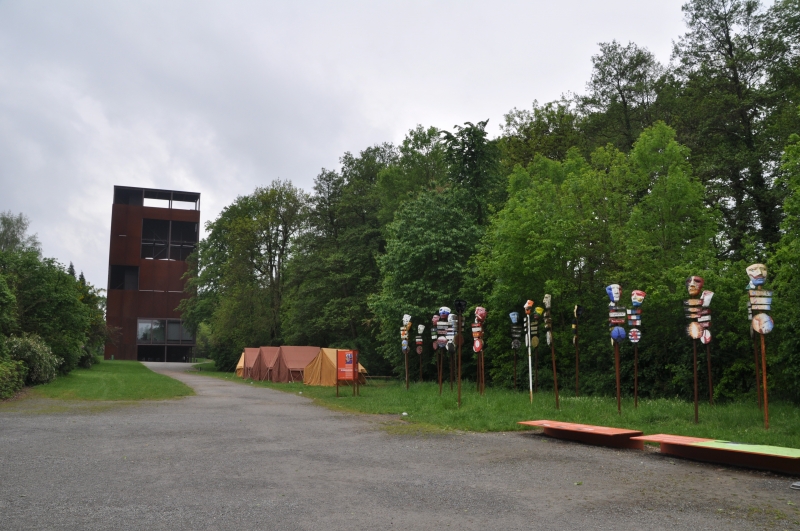
In Bad Iburg, the treetop walkway leads through a forest experience along a route of almost 600 metres. Its accessible entrance tower is over 30 metres high and offers panoramic views of Iburg Castle and the Teutoburg Forest. The walkway and its exhibition pavilion provide insights into the geological history of the Teutoburg Forest and are part of the UNESCO Global Geopark TERRA.vita. Iburg Castle is the only surviving hilltop castle in the Osnabrück region—the view thus brings together the landscape and a striking historic building.
The 115-kilometre DiVa Tour between Bramsche and Bad Essen offers a different perspective. It is described as a leisurely cycling route along the Mittelland Canal and is connected to public transport: services listed include trains operated by WestfalenBahn, NordWestBahn and Deutsche Bahn, the Bremen tram and buses operated by Stadtwerke Osnabrück. If you include the route in your plans, check the connections again before setting out.
Museums and traces of history
At the Bramsche Textile Museum, fluffy wool blankets are made on working machines that are over 100 years old. Visitors can see a vivid example of textile production. At the Kalkriese Museum and Park, you can view exhibits about the Battle of the Teutoburg Forest, presented using multimedia. The two places bring history to life in different ways: one through machinery and production, the other through the presentation of finds and exhibits.
The permanent exhibition at the Museum in the Monastery traces the history of the museum building’s use across three periods: as a monastery from the 13th to the 18th century, as an administrative office and district administration in the 19th century, and as a museum in the 20th century. The exhibition focuses on how the building’s use changed over time.
At the Schnippenburg Museum, a public tour takes place year-round on the first Sunday of every month at 2:30 pm. There are also bookable themed tours and museum education activities at three locations: in the museum, at the archaeological site and in the Iron Age House. If you are planning your visit around a tour, check the date in advance.
Bad Rothenfelde also combines architecture with a visitor experience: 50 metres of the historic brine passage can be walked on dry ground via wooden walkways and grates. The two graduation towers date from 1777 and 1824 and form a large open-air inhalatorium. The town thus complements the hiking and museum themes with its own chapter in the history of brine.
Choose the right focus for your accommodation search
Consider whether you would rather focus on hiking and cycling routes, the treetop walkway, or museums and historic buildings. You can then use the specific place names as a starting point for tailoring your search to your interests.
Discover more destinations
Discover more destinations: Merzen, Badbergen, Rieste, Quakenbrück, Osnabrück, Melle, Bad Laer, Georgsmarienhütte, Bramsche, Bissendorf, Belm, Bad Rothenfelde, Bad Iburg, Bad Essen, Ankum, Alfhausen, Gehrde, Bippen, Menslage, Fürstenau, Bersenbrück, Hagen Am Teutoburger Wald, Hesepe, Glandorf, Wallenhorst, Atter, Bohmte, Ostercappeln, Hilter Am Teutoburger Wald, Eggermühlen, Dissen Am Teutoburger Wald, Nortrup, Hasbergen.
Go to the main travel overview: Lower Saxony.
